



PT360 Services
Postpartum Physical Therapy Atlanta
Your body goes through significant changes during
pregnancy and childbirth, and recovery doesn’t
end when your baby arrives.
At PT360, Claudia Smith, PT, DPT provides individualized
postpartum physical therapy to help you rebuild strength,
restore core stability, address pain or movement limitations,
and safely return to the activities you love.
Whether you delivered weeks, months, or even years ago,
postpartum rehabilitation can help address changes that
haven’t resolved on their own.
What Is Postpartum Physical Therapy?
Postpartum physical therapy is specialized rehabilitation designed to help your body recover from the physical changes associated with pregnancy, labor, and delivery.
Pregnancy affects your abdominal muscles, pelvic floor, posture, hips, back, and overall movement patterns. Childbirth, whether vaginal or by C-section, can create additional changes that require time and targeted rehabilitation to recover.
Working with a physical therapist after pregnancy can help you understand what’s happening in your body, rebuild strength safely, and address symptoms that may be keeping you from comfortably returning to exercise, work, parenting, or everyday activities.
At PT360, your postpartum recovery plan is based on your body, your delivery experience, your symptoms, and your goals.
Your Postpartum Recovery Is Unique
There isn’t one timeline that every woman should follow after childbirth.
Some women feel ready to become active relatively quickly but aren’t sure how to safely progress. Others continue experiencing weakness, discomfort, leakage, abdominal separation, or back and pelvic pain long after their traditional postpartum checkup.
And sometimes symptoms don’t become noticeable until you begin increasing your activity.
You may benefit from postpartum physical therapy if you notice:
✔ Core or abdominal weakness
✔ Diastasis recti
✔ C-section discomfort or scar restrictions
✔ Pelvic or SI joint pain
✔ Low back pain
✔ Hip pain
✔ Pelvic floor weakness
✔ Urinary leakage
✔ Pelvic pressure or heaviness
✔ Difficulty returning to exercise
✔ Pain during exercise
✔ Changes in posture
✔ Weakness when lifting or carrying your baby
✔ Difficulty returning to running or higher-impact activities
You don’t have to wait until something becomes painful to seek postpartum PT. Physical therapy can also help you determine how to safely progress back to the activities you want to do.
Conditions We Treat After Pregnancy
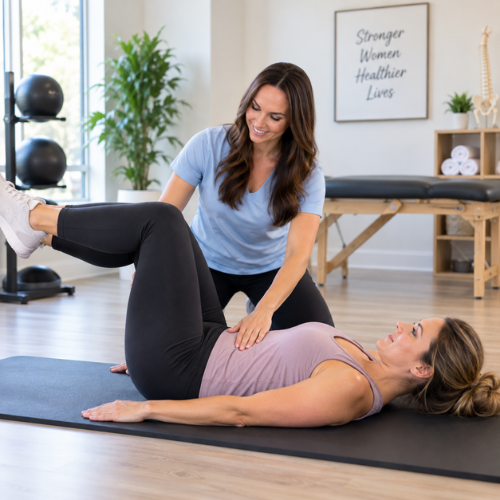
Diastasis Recti
Abdominal separation is common during pregnancy, but persistent diastasis recti can affect core strength, posture, lifting, and your ability to comfortably return to exercise.
Treatment can focus on restoring abdominal coordination, breathing mechanics, core stability, and functional strength.
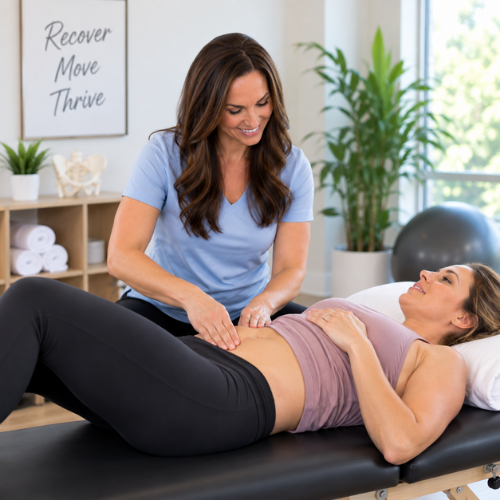
C-Section Recovery
A C-section is major abdominal surgery, and recovery involves more than waiting for the incision to heal.
Physical therapy may address scar mobility, abdominal weakness, core activation, posture, lifting mechanics, and movement restrictions as you gradually return to everyday activity.
Core Weakness
Your abdominal muscles, diaphragm, back, hips, and pelvic floor work together as a coordinated system.
Postpartum rehabilitation can help retrain this system so you can confidently lift, carry, bend, exercise, and perform everyday movements.
Low Back & Hip Pain
Changes in posture, muscle strength, movement, and the demands of caring for a baby can contribute to persistent back or hip discomfort.
We’ll evaluate how your core, hips, pelvis, and movement patterns are working together rather than simply focusing on where it hurts.
Pelvic Floor Changes
Pregnancy and childbirth can contribute to urinary leakage, pelvic pressure, weakness, pain, or other pelvic floor symptoms.
Patients experiencing these concerns can also receive specialized Pelvic Floor Physical Therapy with Claudia. This should link directly to your existing page.
Return to Exercise
Getting cleared for exercise doesn’t necessarily tell you how to return to it.
Postpartum PT can help evaluate your strength, stability, movement, and tolerance so you can gradually progress toward strength training, fitness classes, running, sports, or whatever activities matter to you.
Rebuilding Your Core After Pregnancy
Your core is more than your abdominal muscles.
Your diaphragm, abdominal muscles, back muscles, hips, and pelvic floor work together to stabilize your body during everyday movement and exercise.
Pregnancy temporarily changes how this entire system functions. After delivery, simply doing more sit-ups or abdominal exercises isn’t necessarily the best way to restore it.
Postpartum core rehabilitation may include:
✔ Breathing and core coordination
✔ Deep abdominal activation
✔ Pelvic floor coordination
✔ Hip and pelvic stability
✔ Progressive strengthening
✔ Functional lifting
✔ Exercise progression
The goal is to help your core work effectively during the movements you actually perform—from picking up your baby to returning to the gym.
Diastasis Recti After Pregnancy
Diastasis recti occurs when the connective tissue between the abdominal muscles stretches during pregnancy, allowing the two sides of the abdominal wall to move farther apart.
Some abdominal separation during pregnancy is expected. After childbirth, however, some women continue experiencing separation along with weakness, decreased abdominal control, or difficulty generating tension through the core.
Rather than focusing only on the width of the separation, Claudia can evaluate how your abdominal muscles function during movement.
Your treatment may include breathing coordination, progressive core strengthening, posture and movement training, and strategies for lifting and exercise.
Physical Therapy After a C-Section
Recovery from a Cesarean delivery deserves its own rehabilitation plan.
As your incision heals, changes in scar mobility, abdominal strength, posture, and movement can sometimes contribute to discomfort or difficulty returning to activity. Treatment may include:
✔ Scar mobility techniques when medically appropriate
✔ Core muscle retraining
✔ Breathing coordination
✔ Postural retraining
✔ Hip and back strengthening
✔ Safe lifting mechanics
✔ Gradual return to exercise
Returning to Exercise After Having a Baby
One of the most common questions postpartum women have is:
“When can I exercise again?”
The answer isn’t exactly the same for everyone.
Your return to exercise should consider more than how many weeks have passed since delivery. Strength, pelvic floor function, core control, balance, symptoms, previous activity level, and the type of exercise you want to return to all matter.
At PT360, we can help you gradually progress from foundational movements to more demanding activities while monitoring how your body responds.
Whether your goal is walking comfortably around the neighborhood, returning to strength training, taking a fitness class, or competing in sports again, we’ll build toward your goals.
Returning to Running Postpartum
Running places significantly greater demands on the core, hips, legs, and pelvic floor than walking.
Before returning to running, Claudia can assess factors such as:
- Core strength and control
- Hip strength
- Pelvic stability
- Balance
- Single-leg control
- Pelvic floor symptoms
- Impact tolerance
- Overall movement quality
From there, she can help develop a gradual progression toward running rather than simply choosing a date on the calendar and hoping your body is ready.
What to Expect at Your Postpartum Physical Therapy Evaluation
Your first visit with Claudia Smith, PT, DPT begins with a conversation about your pregnancy, delivery, recovery, current symptoms, activity level, and goals.
Your evaluation may include:
✔ Posture and movement assessment
✔ Core strength and coordination
✔ Hip and pelvic stability
✔ Breathing mechanics
✔ Functional movements
✔ Diastasis recti assessment
✔ C-section scar and mobility assessment when applicable
✔ Pelvic floor assessment when appropriate and with your informed consent
From there, Claudia will develop an individualized treatment plan based on what your body needs to recover and move forward.
Your Personalized Postpartum Treatment Plan
Core Retraining
Restore abdominal strength, stability, and coordination after pregnancy.
Therapeutic Exercise
Build strength progressively based on your current ability and goals.
Manual Therapy
Hands-on techniques may help address mobility restrictions and muscle tension.
C-Section Rehabilitation
Address scar mobility, abdominal function, and movement following Cesarean delivery.
Functional Strengthening
Prepare your body for lifting, carrying, exercise, running, sports, and everyday life.
Home Exercise Program
Continue making progress between appointments with exercises selected specifically for you.
Meet Your Postpartum Physical Therapist
Claudia Smith, PT, DPT

Claudia Smith, PT, DPT provides individualized postpartum physical therapy focused on helping women regain strength, improve movement, and confidently return to the activities that matter to them.
Her one-on-one approach allows treatment to evolve with your recovery rather than following a one-size-fits-all postpartum program.
Women's Health Physical Therapy | Pelvic Floor Physical Therapy | Prenatal Physical Therapy | Postpartum Physical Therapy
Why Choose PT360 for Postpartum Physical Therapy?
✔ One-on-one care with your physical therapist
✔ Individualized postpartum rehabilitation
✔ Private treatment rooms
✔ Core and pelvic floor expertise
✔ Evidence-based treatment
✔ Treatment designed around your goals
✔ Convenient Atlanta-area locations
Frequently Asked Questions
When should I start postpartum physical therapy?
The right time varies depending on your delivery, healing, symptoms, and medical history. Some women begin after receiving appropriate medical clearance, while others seek physical therapy months or years after childbirth for symptoms that have persisted.
Do I need to have pain to see a postpartum physical therapist?
No. Postpartum PT can also help assess strength, core function, movement, and readiness to return to exercise even when you’re not experiencing pain.
Can postpartum physical therapy help diastasis recti?
Yes. Physical therapy can evaluate how your abdominal wall is functioning and use individualized exercises to improve core strength, coordination, and functional movement.
Can physical therapy help after a C-section?
Yes. Once appropriate for your stage of healing, treatment may address scar mobility, abdominal weakness, core coordination, posture, movement, and gradual return to exercise.
Can postpartum PT help with urinary leakage?
Yes. Urinary leakage after childbirth can be related to pelvic floor dysfunction. Claudia also provides specialized Pelvic Floor Physical Therapy for bladder, bowel, pelvic pain, and other pelvic floor concerns.
When can I start running again after childbirth?
There isn’t one timeline that’s appropriate for everyone. Your readiness depends on healing, strength, pelvic floor function, impact tolerance, symptoms, and other factors. A postpartum evaluation can help determine an appropriate progression.
Is it too late for postpartum physical therapy?
No. You can seek physical therapy months or even years after childbirth if you’re experiencing weakness, pain, pelvic floor symptoms, or difficulty returning to activities.
Do I need a referral?
No, the state of Georgia allows for direct access to Physical therapy for the first 8 visits or 30 days. We handle referrals from your doctor after that.
Feel Strong Again After Pregnancy
Your postpartum recovery doesn’t have an expiration date.
Whether you’re weeks after delivery or still dealing with changes years later, postpartum physical therapy can help you rebuild strength, restore movement, and confidently return to the activities you love.
Schedule a Postpartum Physical Therapy Atlanta evaluation with Claudia Smith, PT, DPT at PT360 today.